Quietly Crafted. Deeply Felt.
Quietly Crafted. Deeply Felt.
Blog Detail
11/08/2026 | 12 Min Read
Material Drenching in Luxury Indian Homes Why Gurgaon Designers Are Dropping Mixed Finishes in 2026
For a while now, the unofficial rule of luxury interiors was: more materials equals more luxury. Marble on the floor, a different stone on the accent wall, veneer on the joinery, metal inlay somewhere for good measure.
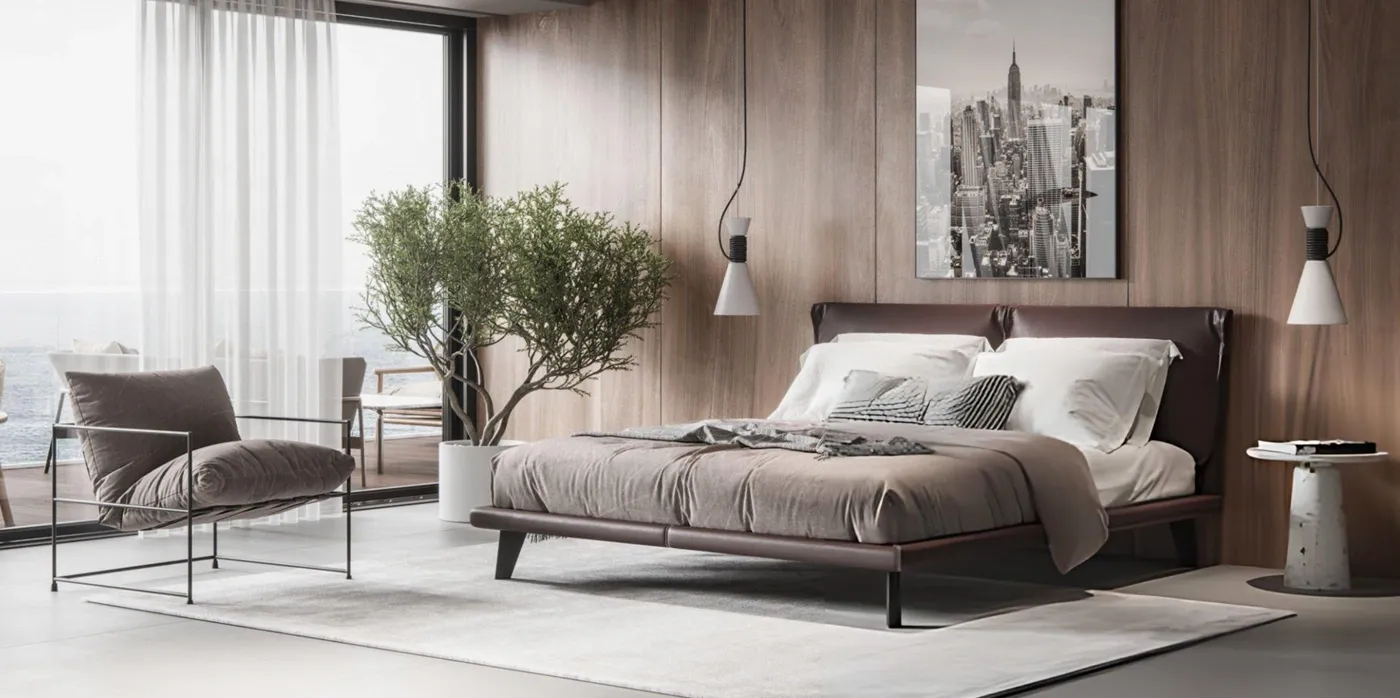
Walk into a lot of high-end Gurgaon homes built five or six years ago and you'll see exactly this, a well-intentioned but slightly busy mix of finishes, each one nice on its own, none of them quite talking to each other. That approach is losing ground fast, and the replacement has a name: material drenching.
What Material Drenching Actually Means
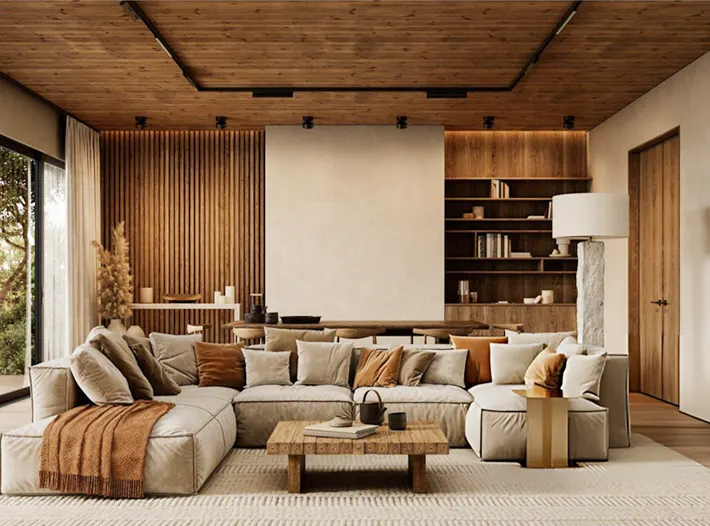
The idea is simple, even if the execution isn't. Instead of using multiple materials to define a space, you use one material, sometimes two, across an entire zone, walls, ceiling, sometimes even the built-in furniture, so the whole area reads as a single continuous surface. It started as "color drenching," painting walls, trim and ceiling the same saturated tone to create an immersive, cocoon-like room. It's since expanded into tile drenching, stone drenching, and full material drenching, where a bathroom's Zellige tile runs floor to ceiling with no break, or a study's timber veneer wraps the walls and the desk unit as one unbroken plane.
As a high-end interior design Gurgaon studio, we've watched this shift happen in real time over the last year and a half, and it's not just an aesthetic mood swing. There's a real logic to it.
Why It Works Better at the Luxury Scale
Here's the thing about mixing finishes: every transition, where one material stops and another starts, is a decision point that can go wrong. A trim line that's slightly off, a grout color that doesn't quite match the adjacent stone, a seam that catches light differently than planned. In a large-format luxury home with high ceilings and long sightlines, these small mismatches compound. You end up with a room that feels busy without necessarily feeling rich.
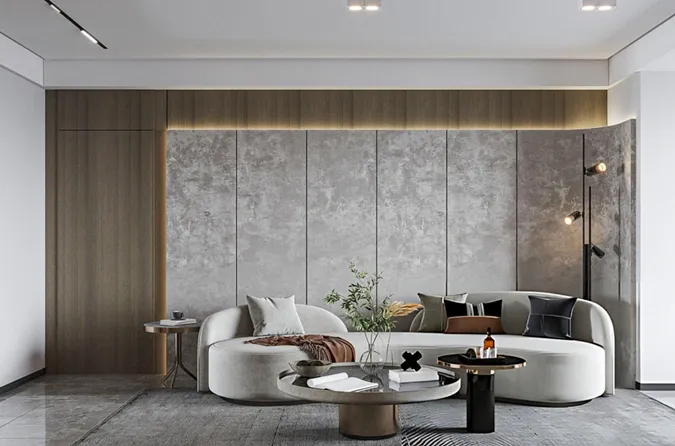
Drenching removes most of those failure points. luxury interior designers in gurgaon One material, run continuously, has nowhere to go visually wrong because there's no seam competing for attention. It also does something psychologically interesting: it makes rooms feel larger and more resolved, because the eye isn't stopping every few feet to process a material change. For Gurgaon's villa and penthouse-scale homes, where a single living or family room can run to a thousand square feet, that continuity matters enormously.
Where We're Using It in Current Projects
Powder rooms and en-suite bathrooms are the easiest place to start, and honestly the place where drenching has the biggest visual payoff for the smallest risk. Running a single natural stone or a handcrafted tile from floor to ceiling in a windowless powder room turns what's usually an afterthought space into one of the most photographed corners of the home.
We're also seeing it move into studies and home bars, spaces that are meant to feel enveloping rather than open. A study drenched in a deep walnut veneer, ceiling included, reads completely differently than the same room with a wood floor, painted walls, and a separate ceiling treatment. It feels considered. It feels like a single decision rather than three separate ones made by three separate people.
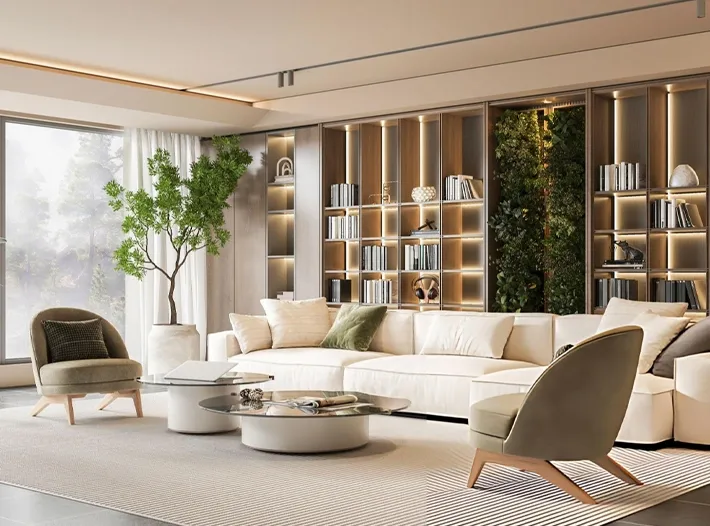
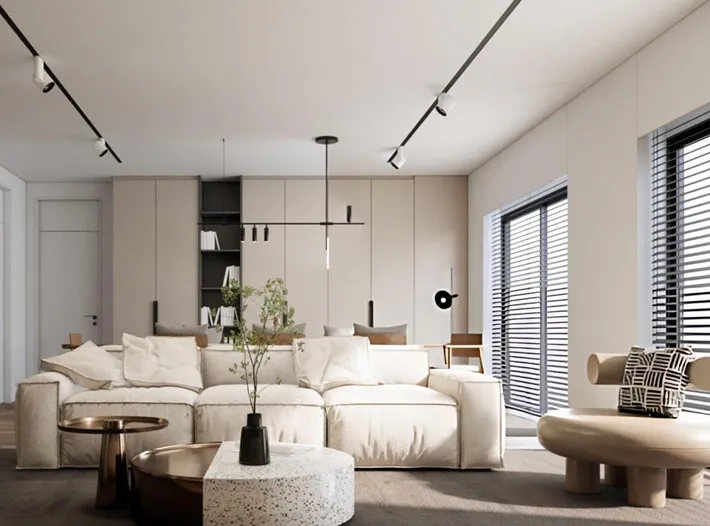
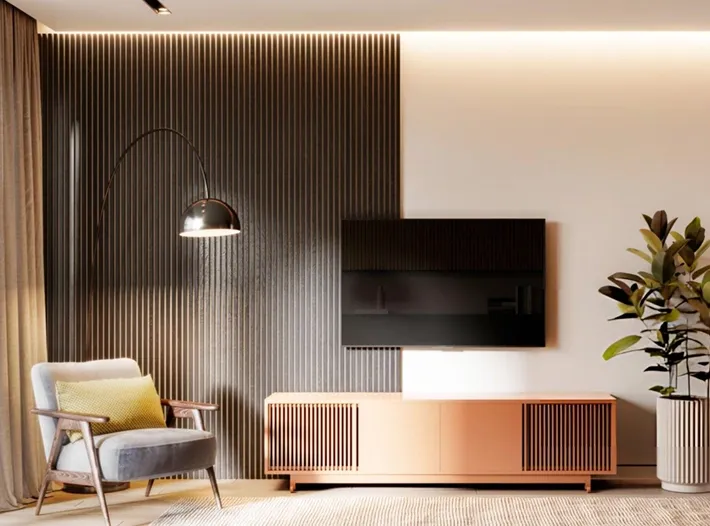
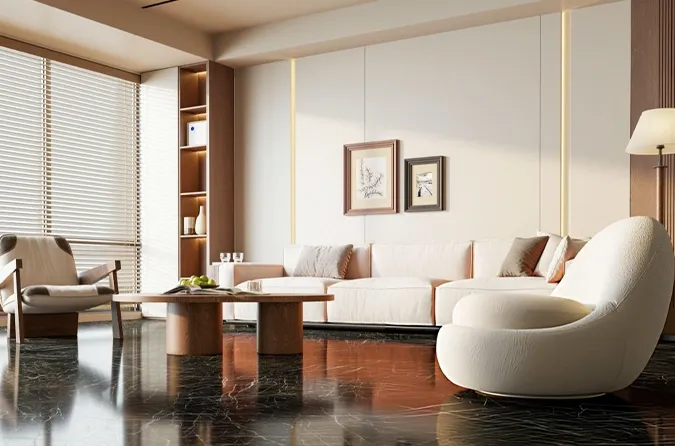
Living rooms are trickier, and this is where we'd push back on doing it everywhere just because it's trending. A living room that opens onto a golf course view or a double-height void usually benefits more from restraint, letting the architecture and the view carry the drama, with drenching reserved for a specific wall or a defined nook rather than the whole room. Not every space wants the same treatment, and a good luxury interior designer in Gurgaon should know which spaces earn it and which don't.
The Practical Trade-Offs Nobody Mentions
Worth saying plainly: material drenching costs more upfront, not less. Running one premium stone across an entire room uses considerably more of that material than using it as an accent and filling the rest with cheaper alternatives. It also demands tighter execution, because with nowhere to hide a seam, workmanship errors are far more visible than they'd be in a mixed-material room. residential interior designing in Gurgaon This is not a trend that forgives an inexperienced execution team.
It also requires committing early. You can't decide to drench a room halfway through a project, because the material quantities, the substrate preparation, even the lighting plan (drenched rooms often need different lighting to avoid looking flat) all need to be locked in at the design stage. This is exactly why we push every client through full 3D visualisation before execution starts. You need to see the drenched room rendered accurately, from multiple angles and lighting conditions, before you commit the budget to it.
Is This a Passing Trend or a Real Shift?
Fair question, and we'd argue it's closer to a correction than a trend. The broader move in luxury interiors right now, in India and globally, is toward quieter, more considered spaces, fewer competing decisions, more confidence in a single idea executed well. Material drenching is really just that philosophy applied to surfaces. Native Sutra It's less "look how many finishes I can afford" and more "look how sure I am of this one." That's a more mature kind of luxury, and it tends to age far better in photographs and in person five years down the line.
At Native Sutra, we don't chase every trend that shows up on a mood board. But this one, we think, has staying power, because it solves a real problem (busy, overworked spaces) rather than just introducing a new decorative gimmick.
Frequently Asked Questions
Q: Is material drenching more expensive than a traditional mixed-finish interior?
A: Generally yes, since it uses significantly more of a premium material per room. It's best reserved for spaces where the visual payoff, powder rooms, studies, feature walls, justifies the additional cost.
Q: Does material drenching work in smaller rooms too, or only large luxury spaces?
A: It actually works exceptionally well in smaller enclosed spaces like powder rooms and bars, where the enveloping effect is strongest. Large open living areas need a more selective, zone-based approach.
Q: Which materials lend themselves best to drenching?
A: Natural stone with strong veining, handcrafted tiles like Zellige, and warm timber veneers all drench well because their texture and pattern carry visual interest even without a contrasting material to break it up.
Q: Will material drenching feel dated in a few years?
A: The specific term may fade, but the underlying principle, fewer materials used with more intention, aligns with the broader move toward quiet, considered luxury, which has historically aged well.
Q: How early in the design process should I decide if I want a drenched room?
A: At the concept and 3D visualisation stage, before execution begins. Material quantities, substrate work, and lighting all need to be planned around it from the start.