Quietly Crafted. Deeply Felt.
Quietly Crafted. Deeply Felt.
Blog Detail
07/04/2026 | 21 Min Read
Designing Living Rooms That Encourage Connection and Conversation
There's something quietly telling about how most Indian living rooms are designed. The sofa faces the television. The armchairs sit against walls. And then people wonder why family gatherings end up with everyone on their phones rather than talking to each other.
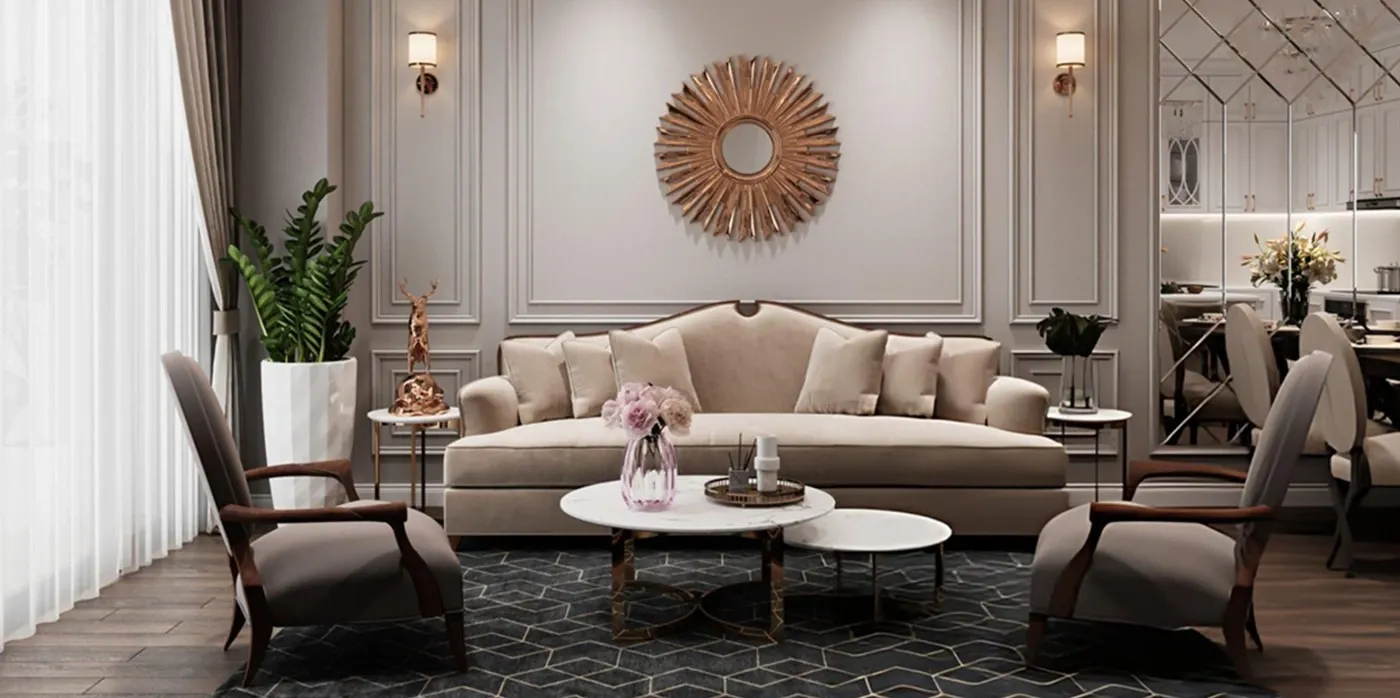
The layout of a room shapes the behaviour that happens inside it. Physical arrangement of furniture, quality of light, acoustic character, and visual warmth of materials all determine whether a space invites people to stay and talk or subtly encourages them to disengage. In Gurgaon, where homes range from compact urban apartments to exclusive villas, designing a living room that genuinely encourages connection is a challenge every household faces.
Why Most Living Rooms Work Against Conversation
The television-centric living room is the most common design failure in Indian homes, and it's rarely the homeowner's fault. Most apartments are handed over with a single feature wall implying where the TV goes, and furniture is arranged accordingly. Everything faces the screen. Conversation becomes secondary.
Even in homes where families consciously sit together, the orientation of furniture works against them. Side-by-side seating on a long sofa doesn't facilitate conversation the way face-to-face arrangements do. interior designers in gurgaon A room where every seat sits more than three metres from every other creates a physical distance that feels subtly formal, even between family members. These are quiet problems. They accumulate slowly, and the result is a home that never quite becomes the gathering place the family wanted.
Furniture Arrangement: The Foundation of a Social Living Room
Reorienting seating away from the television as the sole focal point is the most fundamental shift in conversational living room design. This doesn't mean removing the TV. It means treating the conversation zone as the primary design element.
A few arrangement principles that residential interior designers in Gurugram consistently apply in well-functioning living rooms:
- Face-to-face or angled seating, where two sofas or a sofa and armchairs sit across from each other, creates natural conditions for conversation
- The ideal distance between seats is one to three metres: close enough for comfortable talking, far enough for physical ease
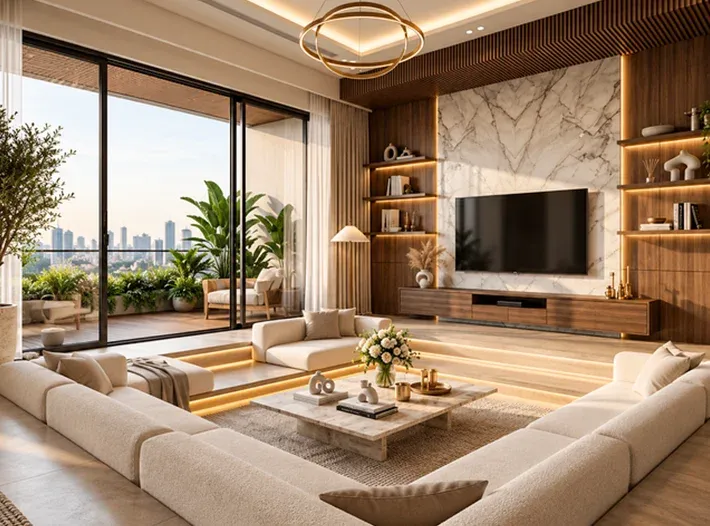
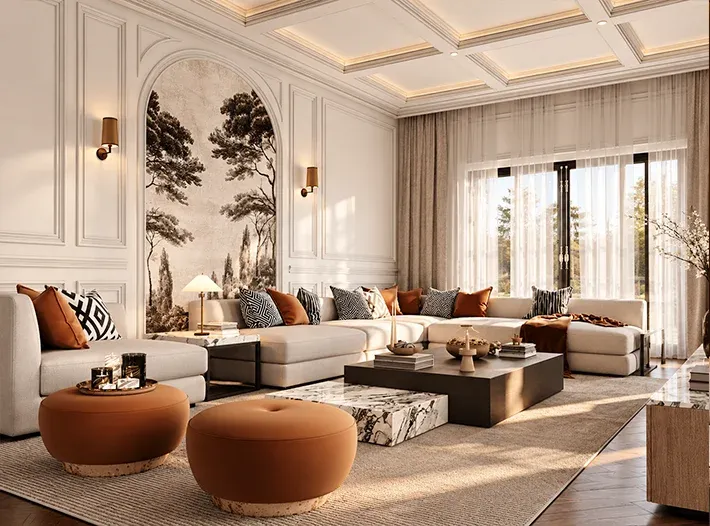
- Sectional or L-shaped sofas create inherently inclusive configurations where no one seat feels disconnected from the group
- Coffee table height matters: too tall creates a visual barrier, too small gives people nothing to gather around
- Floating furniture away from walls brings people into a tighter, more engaged arrangement than perimeter-hugging layouts
Lighting and Acoustics: The Details That Make People Stay
Overhead lighting that floods a room uniformly is one of the most underestimated obstacles to warmth. Bright uniform light is functional but not inviting. It creates the ambience of a waiting room rather than a home.
Layered lighting changes this. Ambient light at lower intensity, warm accent lighting on art or architectural features, and task lighting for specific functions create depth that makes people want to linger. Warm colour temperatures, typically 2700K to 3000K, are significantly more conducive to relaxed conversation than cool white lighting.
Acoustics are equally overlooked. Hard surfaces throughout a room, polished stone floors, glass panels, bare ceilings, create an environment where voices bounce and conversation requires more effort than it should. The fix is practical:
- A large area rug absorbs floor-level sound reflection significantly
- Upholstered seating, lined curtains, and soft cushions all contribute to acoustic absorption
- Books on open shelves, plants, and textured wall treatments break up sound in ways that feel natural rather than engineered
Material Warmth and Colour: Inviting People to Settle In
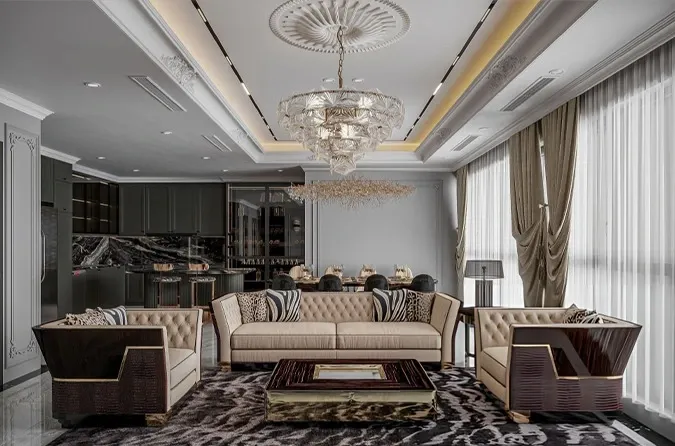
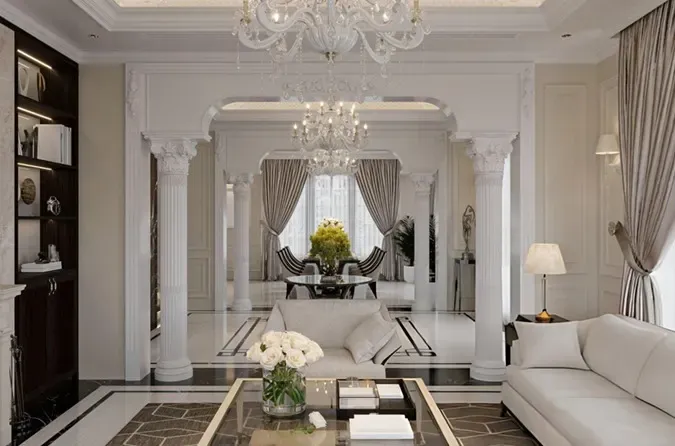
Cold, clinical material palettes produce rooms that look impressive in photographs and feel subtly uncomfortable in person. commercial interior designers in gurgaon Warmth comes from materials that have texture and depth: timber, boucle and linen upholstery, natural stone with visible grain, terracotta accents, and soft wool rugs.
The colour palette of a conversational living room should sit in warm neutrals, with deeper tones used as anchors rather than as the dominant register. Plants bring organic movement into a space, softening geometric rigidity in a way that makes a room feel alive rather than staged.
How Native Sutra Designs Living Rooms Built for Real Life
Native Sutra's residential practice in Gurgaon starts from a specific principle: spaces should serve the people inside them. Applied to living room design, this means mapping how the household actually gathers before deciding how the room should be arranged.
Before any concept is developed, the team works to understand:
- How many people typically gather on weekday evenings versus weekends
- Whether the family primarily watches together or talks together
- Whether guests are frequent, and how hosting changes the room's demands
- How children use the space differently from adults
These answers shape design responses that are specific to the household, not generic interpretations of "modern living room."
The Fusion House project in Tatvam Villas, Gurugram, reflects this thinking clearly. Large aluminium sliding doors created a convenient indoor-outdoor connection. Warm earthy materials, ikat and linen upholstery, indigenous art, and a layered furniture arrangement centred conversation as much as the view. The result was a living room that felt genuinely social, not staged for a photograph.
As commercial interior designers in gurgaon with a parallel residential practice, Native Sutra brings an understanding of how spaces shape human behaviour that purely residential firms rarely develop. The same principles that make a boardroom conducive to productive conversation, sight lines, seating proximity, acoustic quality, lighting warmth, apply directly to residential living rooms.
Their full turnkey service means the vision developed in consultation is the one that gets executed. Materials are sourced, vendors coordinated, and site quality supervised by the same team that developed the design. What a client sees in a 3D visualisation is what they walk into at handover.
A Living Room Worth Gathering In Starts With the Right Conversation
The best living rooms in Gurgaon aren't necessarily the most expensive ones. They're the ones where every decision was made with a clear understanding of how that specific family lives. That clarity only comes from a design process that starts with listening. Native Sutra has been building these rooms across Gurgaon's premium residential landscape for years, and the approach they bring to each project is precisely what turns a well-located apartment into a home people genuinely want to gather in.
FAQs
What is the most important factor in designing a conversational living room? Furniture arrangement. Seating that allows people to face each other within a comfortable distance of one to three metres is the foundation everything else builds on. Without the right configuration, no amount of beautiful materials or good lighting fully compensates.
Should the television be the focal point of the living room? Not necessarily. A TV can be one element of a well-designed living room without dominating the entire arrangement. When seating is oriented primarily toward the screen, conversation becomes secondary by design. The better approach is a primary conversation zone with the TV integrated as one of several functions the room serves.
How does lighting affect the social quality of a living room? Warm layered lighting at lower intensities creates an intimate, inviting atmosphere that encourages people to stay. Harsh overhead lighting produces the opposite. A living room that can shift between daytime functionality and evening warmth through a simple dimmer will feel noticeably more social during the hours it's most used.
How can acoustic quality be improved without a full renovation? A large area rug, upholstered seating, lined curtains, and soft furnishings all absorb sound reflection significantly. The difference between a hard-surface room and one with soft furnishings is physically felt in how much effort conversation requires, even when people can't consciously identify why one room feels easier to talk in.
Does Native Sutra work on both residential and commercial interior projects in Gurgaon? Yes. Native Sutra works across luxury residential interiors, corporate offices, coworking spaces, and commercial interior design in Gurgaon and Delhi NCR. Their dual residential and commercial practice gives them a broader understanding of how spaces shape human behaviour than residential-only firms typically develop.