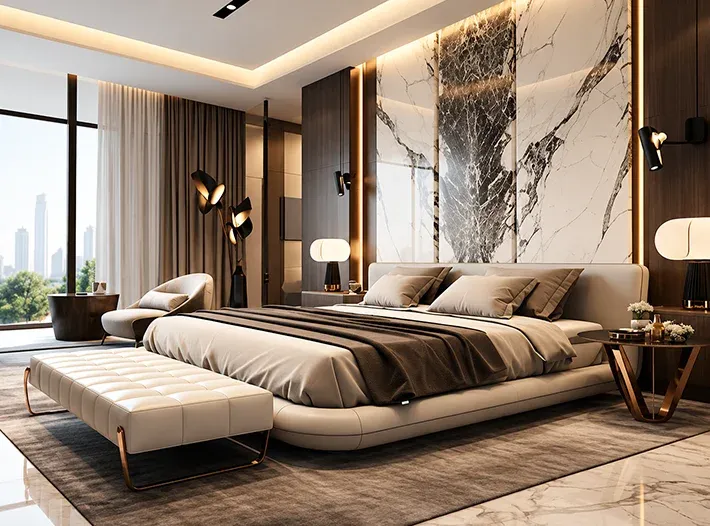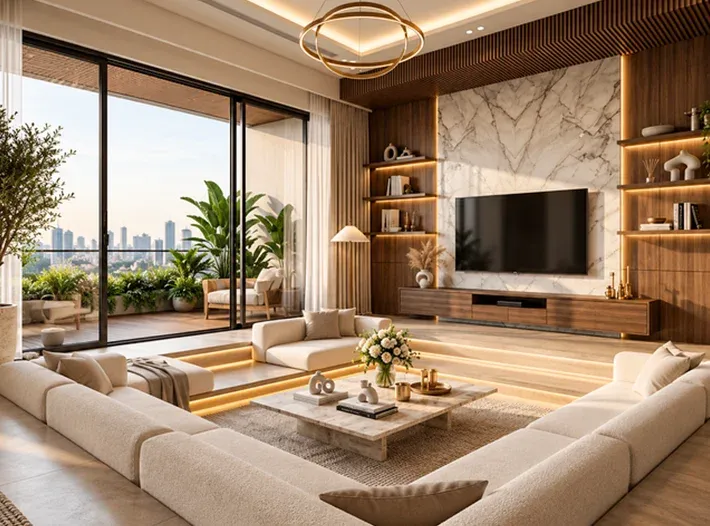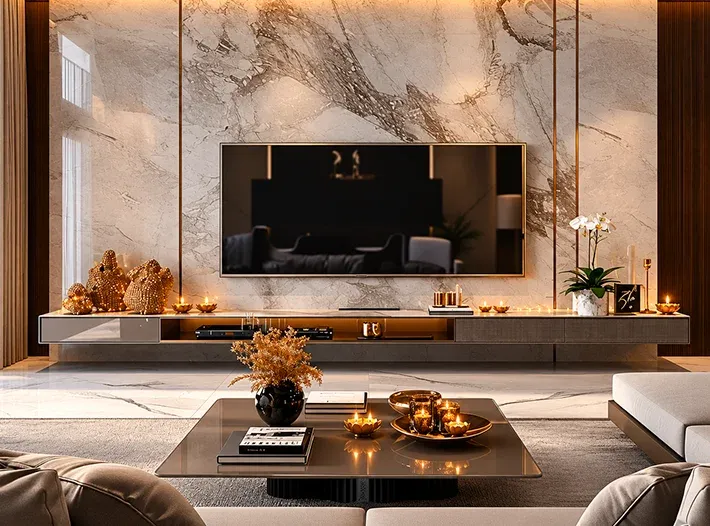
Quietly Crafted. Deeply Felt.
Quietly Crafted. Deeply Felt.
Blog Detail
03/07/2026 | 36 Min Read
How to Choose the Best Luxury Interior Designer for a Full Home Makeover
Embarking on a comprehensive residential transformation is a significant financial and emotional commitment. When you are reimagining an entire luxury estate, a penthouse, or an expansive multi-generational home, the project extends far beyond selecting sophisticated color palettes or sourcing imported furniture. A complete renovation involves complex structural engineering, custom architectural millwork, spatial optimization, and the seamless integration of modern building systems.
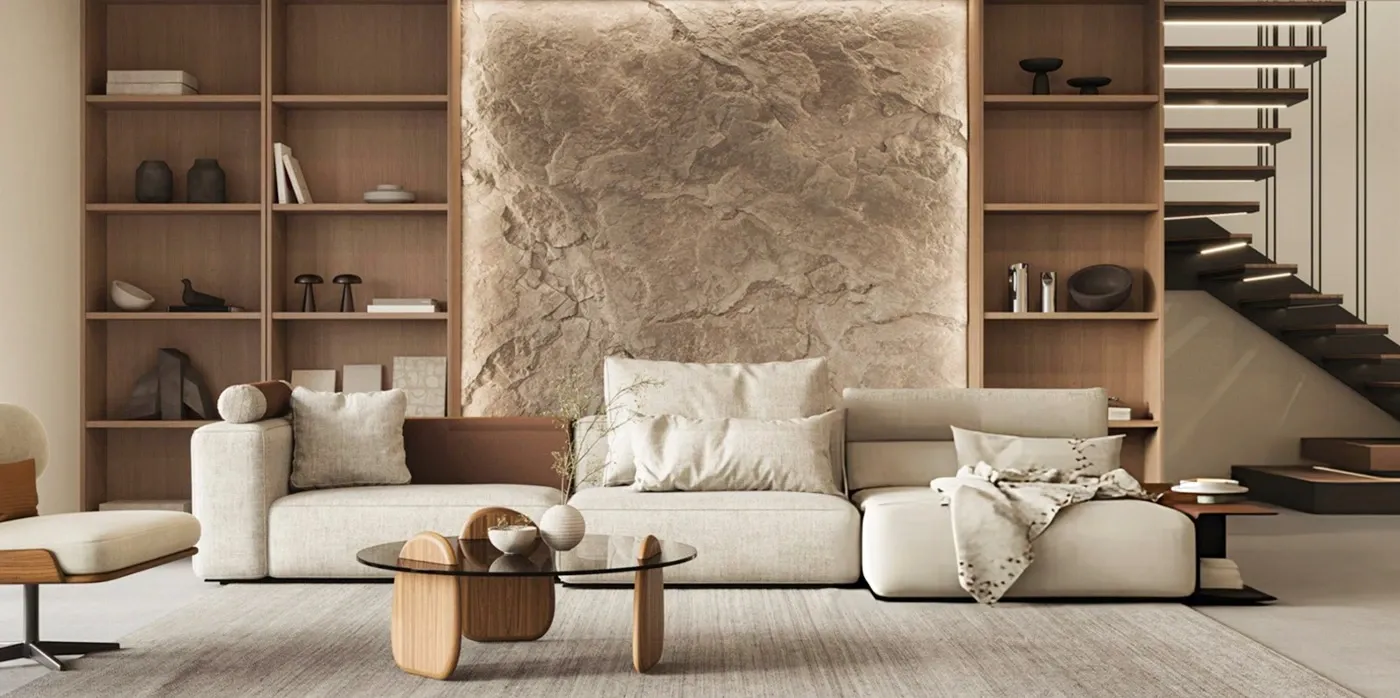
In a saturated design market like Delhi NCR, distinguishing between surface-level decorators and true structural design studios can be challenging. Striking digital renders look pristine on a screen, but real-world implementation demands strict engineering precision, reliable vendor networks, and rigorous project management.
To ensure your investment results in a home that is both structurally sound and aesthetically exceptional, you need a clear framework to evaluate potential design partners. This comprehensive guide details the non-negotiable criteria you must consider when searching for the best luxury interior designer for a full home makeover.
1. Look Beyond Renders: How to Assess Real-World Execution Quality
With advanced 3D rendering engines and AI-assisted design software widely available, creating breathtaking digital concepts has never been easier. However, the true measure of an elite design firm is not found in their presentations, but in their built portfolio. When you compare luxury interior designers' execution quality, you must look closely at their physical work to evaluate their standard of craftsmanship.
To truly understand a firm's capabilities, request a physical walkthrough of both an active construction site and a recently handed-over residence. When touring these spaces, pay close attention to the fine details:
- Millwork and Joinery Transitions: Open custom wardrobe shutters and pull out heavy drawers. Look at the interior lining, the hardware alignments, and whether the soft-close mechanisms operate without friction. True luxury is defined by the absolute perfection of elements that remain hidden from casual view.
- Material Junctions and Flush Finishes: Inspect the intersections where contrasting materials meet. For instance, the transition line between imported Italian marble flooring and custom-engineered hardwood planks should be perfectly flush, without uneven thresholds or excessive silicone fillings.
- Geometric Alignment: Examine long architectural lines, such as wall paneling, false ceiling drop levels, and skirting details. Any slight deviation or wave patterns under layered lighting reveals poor on-site supervision and weak quality control.
2. Evaluate the Technical and Structural Backbone of the Studio
A complete residential overhaul frequently requires modifying load-bearing structures, altering plumbing lines, re-routing complex HVAC ducts, and installing smart automation systems. Therefore, an interior designer for complete home renovation projects cannot function merely as an aesthetic stylist. They must possess robust architectural and technical proficiency.
Before signing a contract, ask the design firm about their internal workflow for technical layouts. A high-end structural transformation should be supported by a methodical, multi-layered planning system:
First, the studio must conduct an advanced spatial audit to evaluate structural loads, optimize natural illumination paths, and identify hidden services within the existing architecture.
Next, this audit must be translated into comprehensive, double-checked working drawings. These blueprints detail electrical wiring routes, acoustic paneling specifications, plumbing slopes, and exact climate control ducting positions, leaving zero room for interpretation by on-site laborers.
Finally, ensure the studio assigns dedicated, qualified project architects or site engineers to your home. Relying entirely on junior site supervisors often results in critical structural details being overlooked, which can lead to expensive corrective work later on.
3. Demystify Pricing Frameworks and Contractual Transparency
The luxury interior sector is notorious for ambiguous pricing structures, unexpected mid-project cost escalations, and delayed handovers. Professional luxury interior designers in Gurgaon protect their clients from these operational risks through precise, legally binding documentation before any material is purchased or broken on-site.
Avoid any firm that provides vague, per-square-foot cost calculations or simplified lump-sum estimates. For a full home makeover, a square-foot pricing model is fundamentally flawed because it fails to account for the unique material specifications, custom configurations, and structural complexities of individual spaces.
Instead, insist on a highly detailed, line-item Bill of Quantities (BOQ). A professional BOQ specifies the exact brand, thickness, grade, and origin of every material utilized—from the structural marine-grade plywood and premium hardware hinges to the specific type of stone seals and premium paint finishes.
Furthermore, your contract should include a explicit "Zero Price Escalation" clause. This ensures that as long as your baseline design requirements remain unchanged, the designer cannot demand additional payments midway through execution due to market fluctuations or poor initial budgeting.
4. Prioritize Custom Manufacturing and Sourcing Infrastructure
True luxury is inherently bespoke; it rejects mass-produced, off-the-shelf modular systems in favor of elements tailored to your specific lifestyle and home layout. To achieve this level of refinement, you need to partner with a design firm that controls its own manufacturing and material sourcing channels.
When assessing the best finishing quality interior designer Gurgaon has to offer, inquire about their physical infrastructure:
- In-House Woodworking and Cabinetry Fabrication: Firms with dedicated manufacturing facilities can maintain strict control over moisture content in natural veneers, curing times for high-end PU (polyurethane) coatings, and the precision of automated edge-banding machinery. This level of quality control is simply impossible to replicate with manual, on-site carpentry.
- Direct Material Sourcing Channels: Elite design practices maintain direct relationships with international stone quarries, boutique textile mills, and specialized glass manufacturers. This direct access allows them to hand-select unique marble blocks with continuous veining or procure specialized architectural hardware that is unavailable through standard commercial retail channels.
- Material Durability Expertise: Delhi NCR experiences extreme climatic shifts, from intense summer heat to high monsoon humidity. Your chosen designer must understand the long-term behavior of premium materials under these specific conditions, ensuring that your custom wall paneling, natural stone surfaces, and engineered flooring do not warp, crack, or lose their luster over time.
5. Align with Evolving Concepts of Modern Luxury
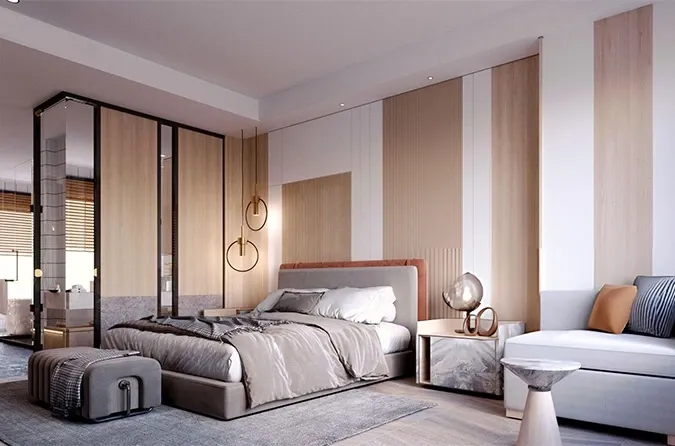
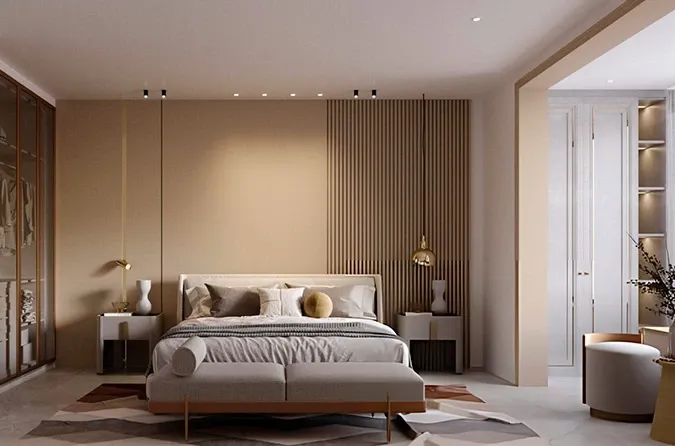
The definition of high-end residential living has fundamentally shifted. Modern luxury is no longer about ostentatious decoration or filling spaces with loud, gilded surfaces. Instead, it focuses on thoughtful restraint, rich textures, and spaces that enhance your daily well-being. Your interior partner must demonstrate a deep understanding of these contemporary design movements:
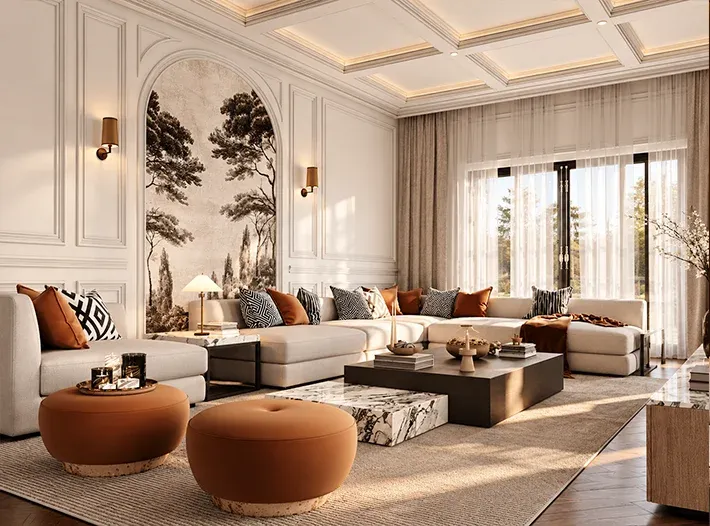
- Quiet Luxury and Soft Minimalism: This approach prioritizes deep spatial harmony, generous structural proportions, and an "earth-rooted" color palette. Instead of cold, industrial grays, modern luxury spaces utilize warm ivories, muted terracottas, and deep walnut tones paired with tactile wall finishes like lime-wash and Venetian plaster.
- Invisible Technology Integration: A luxurious home should function intelligently without looking like a commercial server room. High-end designers expertly conceal automated climate controls, motorized window treatments, and high-performance AV systems within the architectural fabric of the building, ensuring technology is felt through comfort rather than seen as clutter.
- Global-Indian Material Fusion: There is a significant movement toward integrating rich Indian making traditions into contemporary spaces. The ideal design partner knows how to seamlessly incorporate handcrafted brass details, hand-knotted natural fibers, or local stone accents alongside clean-lined, modern European furniture configurations.
Establishing Your Project Milestones
A full home makeover is an intricate process that unfolds over several months. To maintain clarity and peace of mind throughout the renovation journey, ensure your chosen design firm utilizes a clear, milestone-based tracking system. Rather than working toward a single, distant completion date, your project should be divided into transparent, verifiable stages:
- Phase 1: Civil and Structural Foundations: Completion of core structural modifications, brickwork adjustments, and initial waterproofing treatments.
- Phase 2: Hidden Infrastructure Services: Complete installation of internal electrical conduits, plumbing lines, automation wiring, and central HVAC ducting.
- Phase 3: Architectural Shell and Sub-flooring: Precision laying of base floorings, stone cladding, and the installation of technical false ceiling grids.
- Phase 4: Custom Fixed Millwork: Installation of bespoke wall panels, custom wardrobe carcasses, and built-in kitchen cabinetry framework.
- Phase 5: Superficial Finishes and Handovers: Final applications of high-end PU coats, wallpaper placements, lighting fixture hookups, and a rigorous deep-cleaning cycle.
Choosing Your Execution Partner
Selecting the right design studio to transform your home is ultimately a choice about who you trust to manage your structural investment. By prioritizing physical execution quality, technical drawing workflows, absolute cost clarity, and robust custom manufacturing, you can move forward with confidence.
Create a Home Designed for Longevity
At Native Sutra, we reject assembly-line solutions and superficial styling. We approach full home luxury makeovers with structural integrity, transparent project management, and a deep appreciation for authentic materials and masterful craftsmanship. Whether you are remodeling an expansive villa or an urban penthouse, our turnkey design and execution teams ensure your space is built to tell a story and engineered to last.