
Quietly Crafted. Deeply Felt.
Quietly Crafted. Deeply Felt.

Blog Detail
You have found the villa. The penthouse. The address you worked years toward. Now comes the part most homeowners quietly dread — finding someone who can turn that expensive blank canvas into a home that actually feels like you.
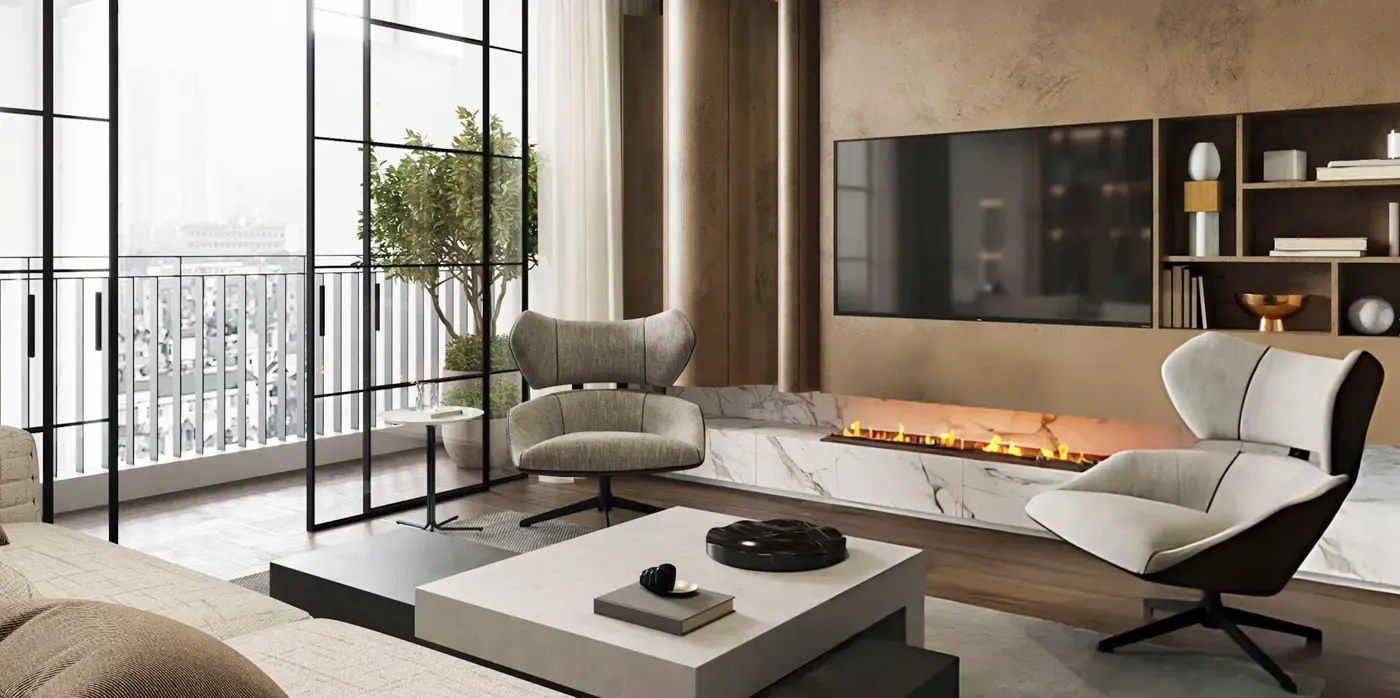
In Gurgaon, that search is harder than it looks. The city has no shortage of firms that promise luxury. Far fewer deliver it. It is about finding a firm that understands that luxury isn't a price tag—it’s a frictionless lifestyle.
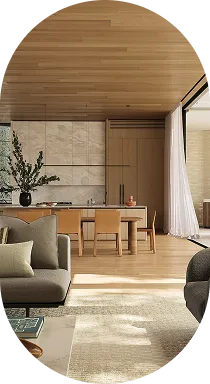
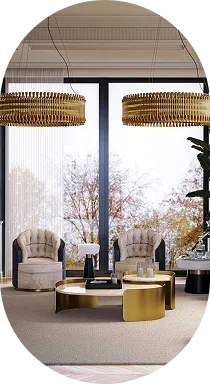
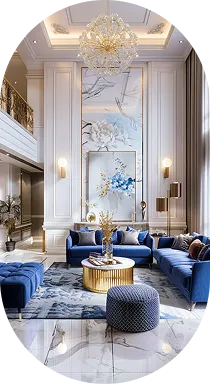
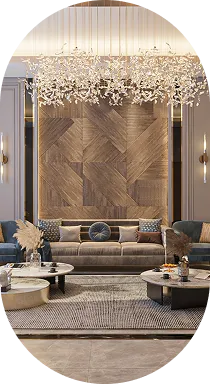
For the modern homeowner, the definition of luxury has shifted. We have moved past the era of loud, gold-leafed opulence and into a time of understated luxury and quiet sophistication. If you are looking to transform a large-scale property, here is what separates the elite firms from the average ones, and why the "Native Sutra" approach has become a benchmark for high-end living.
Most people assume luxury residential interior designing in Gurgaon is just apartment design with a bigger budget. It is not.
A penthouse with double-height ceilings and wraparound views is an architectural experience, not just a large flat. A villa with private gardens, a pool, and multiple outdoor zones demands thinking about how spaces connect — how a family moves through the home at different times of day, how indoor and outdoor living blur at the edges, how proportion and volume shape the way a room feels before a single piece of furniture enters it.
At this scale, you are not just choosing finishes. You are making architectural decisions. And that distinction is exactly where many firms fall short.
Ask most luxury homeowners what they want, and they will say "something elegant but not overdone." What they mean, when you dig deeper, is usually this:
Privacy and retreat. The home must feel sealed from the world — acoustically, visually, emotionally.
Execution that holds up. Not how the home looks on handover day, but how it looks three years in. Do the drawers still run quietly? Has the upholstery held its structure? This is where many so-called premium firms quietly disappoint.
Genuine customisation. Not picking from a high-end catalogue, but furniture designed for your specific space, your proportions, your household.
A timeline you can trust. In a market where "two more weeks" routinely stretches to two more months, predictability is its own kind of luxury.
These are worth naming plainly because they are common and expensive.
Chasing trends over longevity is the biggest one. Fluted panels, terrazzo, Japandi minimalism — some of these age well. Most do not. A home designed around a trend looks dated in five years. Design around who you are, and it holds up indefinitely.
Overdesigning is real. The best luxury interiors have restraint. They breathe. Filling every corner with something significant is what makes a space feel like a showroom rather than a home.
Treating lighting as an afterthought. Ambient, task, accent, and mood — these are four distinct layers, and a room with only ceiling downlights will always feel flat, regardless of how much the furniture costs. Lighting is a foundational design decision, not a final one.
Hiring on Instagram aesthetics without verifying execution. A beautiful photograph and a beautifully executed home are not the same thing. Always ask to see a completed project in person, one that has been lived in for at least a year.
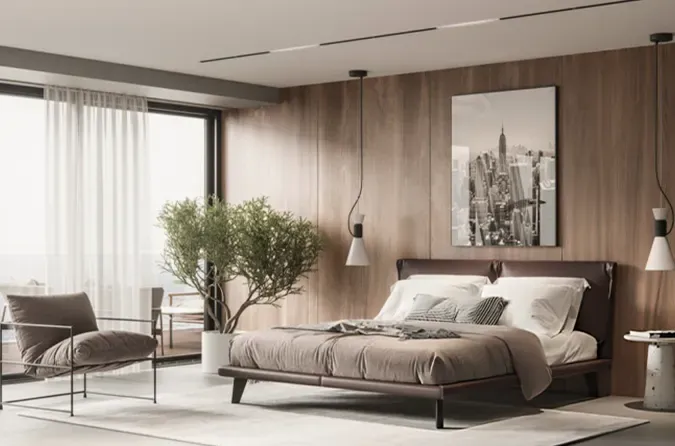
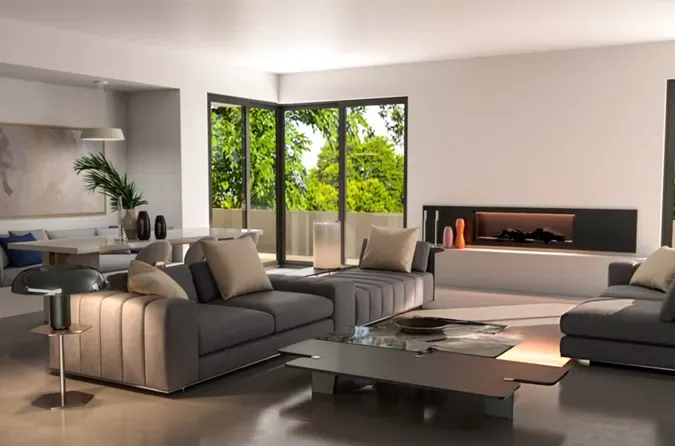
Founded by architect Parul Agarwal and strategy expert Vineet Agarwal, Native Sutra is one of the few luxury interior designers in Gurgaon where architectural thinking and operational discipline genuinely coexist. With over 500,000 sq ft of designed space across Delhi NCR, here is what actually sets them apart.
Before a single moodboard is assembled, the Native Sutra team works to understand the people behind the project — their routines, their cultural references, what bothers them about their current space. Their Fusion House project in Tatvam Villas is a good example: a luxury villa redesigned around Contemporary Indian Chic, weaving ikat, handwoven linen, and Gwalior sandstone into a home that felt genuinely inhabited rather than curated.
One of the most common complaints in this industry is that the final home looks nothing like the initial renders. Native Sutra has built a specific reputation for closing that gap — the delivered result matches what was shown at the design stage, down to the last fixture.
Once the contract is signed, the number stays the same. Because the founding architect leads the process, structural issues are identified and absorbed in the planning stage rather than passed on to the client as mid-project surprises.
For NRIs and investors, Native Sutra also offers property management — handling maintenance, tenancy, and ongoing upkeep. Clients based in Singapore, Vietnam, and elsewhere have handed over projects entirely remotely and had their homes managed for years afterward without a single visit.
If you are planning a villa or penthouse project in Gurgaon and want a team that brings both design depth and delivery discipline, Native Sutra is worth that first conversation.
Visit nativesutra.com or write to info@nativesutra.com.
How long does a luxury villa or penthouse project take? Four to six months for a full-scope project with custom furniture and civil work. Less than that usually means corners are being cut somewhere.
Can one firm handle both design and structural work? The best ones can. When architects lead the project, structural modifications are planned and executed by people who understand the full implications — not subcontracted out as an afterthought.
How do I verify a firm's execution quality? Visit a completed project that has been lived in for at least a year. Look at joints, hardware, material transitions. A portfolio photograph tells you nothing about how a home holds up.